Connecticut winters do not forgive neglected heating equipment. In Middlefield, where lake winds off Lake Beseck meet the slopes of Powder Ridge, a gas furnace takes real punishment from November through March. Small issues snowball into bigger failures under this load. The upside: most breakdowns give plenty of warning if someone knows what to look for and addresses problems early. This article explains the most common furnace issues seen in Middlesex County homes, what they sound like, what they cost if ignored, and when to call for gas furnace services from a licensed, local team.
Direct Home Services serves Middlefield and Rockfall (06455 and 06481), with quick access to Reeds Gap, Baileyville, Jackson Hill, and the neighborhoods around Lyman Orchards and the Coginchaug River. The company handles natural gas and propane (LP) furnaces, from single-stage units to high-efficiency condensing models with AFUE ratings of 90% and above. The goal is simple: keep homes warm, safe, and efficient through the deepest cold snaps.
Why Connecticut furnaces act up in January
The toughest days hit when temperatures swing from a mild afternoon to a subfreezing night. That rapid change forces a furnace to cycle more often and run hotter. Salt and moisture tracked in from slushy driveways load filters faster. Older ductwork in historic Rockfall colonials leaks heat into basements and attics. Newer homes around Lake Beseck push for high efficiency with tighter envelopes, which raises the stakes for ventilation and combustion air management. The climate and housing stock create a predictable pattern of problems that a technician who works the 06455 area learns to anticipate.
Short cycling: constant on-off behavior that wastes money
Short cycling is the furnace equivalent of riding the brakes. The system starts, runs for a minute or two, shuts off, then restarts. Homeowners notice rooms that never feel comfortable, a jump in gas use, and premature wear on the ignitor and blower.
Common causes include a clogged air filter, a faulty limit switch misreading temperature, an incorrectly sized furnace, or a failing draft inducer motor. In Middlefield, it often starts with a dirty filter after holiday hosting or an overlooked fall tune-up. A MERV 11 or MERV 13 filter captures fine particles, but it can also choke airflow if left in place too long. Replace filters on a 60 to 90 day cycle during heating season, faster if pets or construction dust are in the home. If short cycling continues with a fresh filter, a technician should test the limit switch and inducer motor under load and verify proper duct static pressure. Ignoring short cycling drives up utility bills by 10 to 20% and shortens furnace life by several years.
Yellow pilot light or unstable flame: combustion red flags
A steady blue flame indicates proper combustion. A yellow, flickering, or lifting flame points to incomplete combustion, a dirty burner assembly, or a gas pressure problem. On electronic-ignition systems, homeowners may hear repeated clicking and see no ignition at all. These symptoms can point to a dirty flame sensor or a failing ignitor, but they can also signal a cracked heat exchanger drawing combustion byproducts back into the airflow.
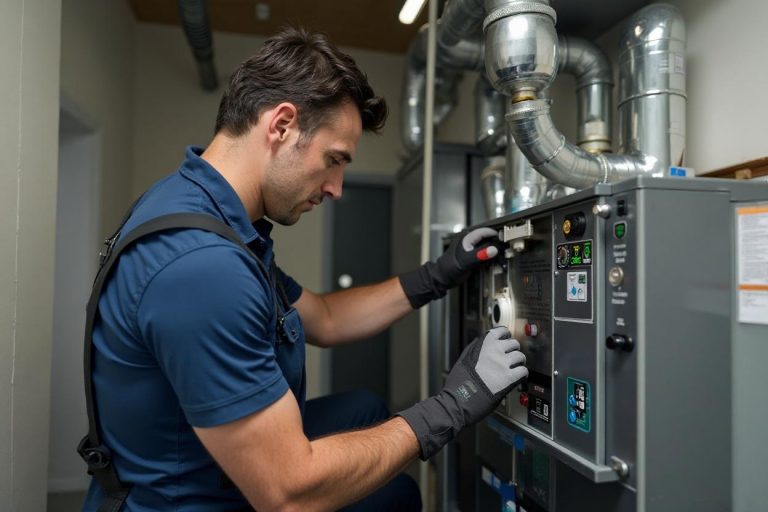
Natural gas and propane furnaces should never run with a yellow flame. Soot buildup on the burner or in the heat exchanger will worsen the problem and raise carbon monoxide risk. A technician will pull and clean the flame sensor, verify microamp readings, inspect burner alignment, and measure CO at the supply plenum during operation. If the flame remains unstable, the next step is a thorough inspection of the heat exchanger for hairline fractures using mirrors and lighting. A cracked exchanger requires replacement of the heat exchanger or the furnace, depending on age and parts availability.
The notorious dirty flame sensor and ignition lockout
The flame sensor proves that the flame is present after gas opens. When that sensor collects oxide buildup, the board cannot confirm flame, and the control shuts gas off. The house cools, the board retries, and the cycle repeats. Homeowners describe “it tries to light, then shuts off” or “I hear clicking, then nothing.” Cleaning the flame sensor is a quick fix for a trained tech. The part is small, but the job needs care to avoid bending the probe or damaging the porcelain insulator. A professional also checks the ignitor resistance and hot-surface glow time to avoid a return call.
Direct Home Services includes flame sensor cleaning during its $99 seasonal furnace safety inspection for Middlefield residents. This one task prevents many no-heat calls during January deep freezes and reduces ignition component wear.
Banging, squealing, and rattling: sounds that matter
A sharp metallic bang at startup often points to delayed ignition in the burner assembly or duct expansion from a high static pressure condition. A loud squeal suggests a blower motor or belt issue in older units. A rhythmic rattle at shutdown can hint at a loose vent pipe or failing draft inducer bearings. In high-efficiency condensing furnaces, gurgling might indicate a condensate drain restriction.
In homes near the Coginchaug River, where basements run damp, inducer motors and blower fans see more corrosion and bearing wear. Addressing these noises early can save a motor. A technician will verify gas pressure and ignition timing, secure venting, measure static pressure, and check blower wheel balance. If the inducer pulls too few inches of water column, safety switches trip and the furnace shuts down.
Blower problems: weak airflow and cold rooms
Uneven heating across rooms in Middlefield is a common complaint. Causes range from a struggling blower motor to a dirty evaporator coil above the furnace, even in winter. A weak blower reduces heat transfer, raises supply temperature at the heat exchanger, and can trip the high-limit switch. The result is short cycles, poor comfort, and higher gas use.
A proper diagnosis includes checking blower amperage, capacitor health, wheel cleanliness, duct leakage, and filter pressure drop. Where older ducts serve additions or finished basements, the airflow may never have been balanced. A small adjustment at the damper or a motor speed change can stabilize temperatures across rooms. For newer two-stage or modulating furnaces, the control settings should match the home’s duct system; otherwise, low-stage operation may starve distant rooms.
Heat exchanger cracks: the line between repair and replacement
A heat exchanger separates combustion gases from the air that circulates through the home. Cracks form from metal fatigue, overheating from low airflow, or corrosive condensate in condensing furnaces. Warning signs include soot around the burner compartment, flame rollout, odd odors, and CO detector alerts.
If a technician suspects a crack, the unit should be taken offline for safety. Many manufacturers cover heat exchanger parts under longer warranties, sometimes up to 20 years, but labor and access can be substantial. For a 15-year-old single-stage furnace, a replacement with a high-efficiency condensing model often makes financial sense. For a five-year-old unit with a warranty, a heat exchanger swap may be the better call. Direct Home Services provides both options with clear pricing and Energy Star-rated choices.
Thermostat, limit switch, and gas valve faults
Control components fail more in extreme temperature swings. A thermostat with a misread temperature can ghost cycle the furnace. A limit switch that reads high due to a blocked filter will shut the burner off before rooms warm. A gas valve that sticks can cause delayed ignition or a no-heat call. Proper troubleshooting involves step-by-step verification: confirm call for heat at the board, verify safeties, test inducer, ignition, and flame sense in sequence, and measure gas pressure under load. Guessing leads to repeat failures; testing prevents surprise midnight breakdowns in a snowstorm.
Middlefield’s range of furnace types and what that means for service
Homes in the 06455 area run a mix of appliances:
- Natural gas furnaces in neighborhoods with utility lines near Middletown and Wallingford lines. Propane (LP) furnaces in Reeds Gap, Baileyville, and parts of Jackson Hill where gas mains do not reach. High-efficiency condensing furnaces (90%+ AFUE) in newer renovations around Lake Beseck. Single-stage legacy units still working in older Rockfall colonials, and two-stage or modulating models in recent additions.
Each type has its own service profile. Condensing furnaces need clean condensate traps and reliable drains to avoid pressure switch trips. LP systems require correct air-fuel adjustments and tank level checks before the first hard freeze. Modulating furnaces deliver stable comfort, but only if the thermostat and control board settings are correct for the duct system. Direct Home Services installs high-efficiency condensing gas furnaces with modulating burners, which smooth out temperature swings common to New England winters while trimming fuel costs.
What a thorough annual tune-up covers
Many breakdowns start as small maintenance misses. An annual tune-up sets the season up for success. A strong program covers the heat exchanger, draft inducer, burner assembly, gas valve pressure, ignition system, electrical connections, safety switches, blower motor and wheel, filter condition, thermostat calibration, and venting. Direct Home Services performs a 21-point safety inspection with a focus on exchanger integrity and inducer efficiency. The team inspects the heat exchanger for hairline fractures and cleans the flame sensor to prevent ignition lockout. Technicians also test CO levels and verify proper combustion through a complete cycle. In Middlefield, where fall can be warm and then plunge fast, the best time to schedule is early October. For homes near the river or with known humidity issues, adding a mid-season check is smart.
Energy efficiency and rising utility bills
If bills trend up even with the same thermostat settings, the furnace may be losing efficiency. Dirty burners, weak blowers, poor duct sealing, or a clogged MERV 13 filter can force longer run times. On a 15-year-old single-stage furnace, shifting to a two-stage or modulating condensing model can cut gas use by 15 to 25% depending on the home. Smart thermostats help, but the biggest gains come from the appliance and airflow. Direct Home Services offers Energy Star-rated systems from Carrier, Trane, Lennox, American Standard, and others, along with an on-site energy audit to identify duct losses and simple fixes that pay back in one to three winters.
Local conditions: how Middlefield homes shape furnace choices
Living near Powder Ridge can mean wind exposure and drifted snow that block intake and exhaust on high-efficiency systems. A brief storm can load vent terminations with snow and ice. Homes around Lyman Orchards see heavy leaf fall that clogs outdoor intakes in late October. Historic Rockfall houses may have smaller return ducts that raise static pressure with thicker filters. Lake Beseck cottages renovated into year-round homes often use hybrid or dual-fuel arrangements, combining a gas furnace with a Mitsubishi heat pump for shoulder seasons.
A local team understands these patterns. During calls in the 06455 and 06481 zip codes, technicians check vent heights against drift patterns, trim intake screens, and recommend filter strategies that balance air quality with airflow. They also confirm combustion air sources for tight, newly insulated homes.
Brands, parts, and what’s stocked on the truck
Service depends on parts availability. In Middlesex County, many homes run Goodman, Bryant, York, and Rheem units. High-end systems from Carrier, Trane, Lennox, and American Standard are common in larger renovations. Direct Home Services stocks universal ignitors, hot surface ignitors for common models, pressure switches, limit switches, flame sensors, and capacitors. For draft inducer motors and control boards, brand specificity matters; the team keeps frequent Rheem and Goodman components on gas furnace services hand and can source OEM Carrier parts quickly. As a Carrier authorized specialist, Direct Home Services installs Infinity series furnaces with communicating controls for the quietest operation and strong energy savings.
Safety first: carbon monoxide and code compliance
Any combustion appliance brings CO risk if venting or the heat exchanger fails. Middlefield homeowners should keep CO detectors near sleeping areas and on every occupied level. Alarms, yellow flames, or soot near the burner compartment mean the system should be shut down and inspected. Direct Home Services technicians hold Connecticut S-1 licenses and NATE certifications. That training shows up in the small details: proper vent pitch, sealed joints on PVC venting, correct gas pressures, drip legs on gas lines, and sizing that meets code. A safe furnace is quiet about it; the proof is a clean flame, correct temperatures, and CO readings at or near zero in the supply air.
What to do before calling for service
Small steps solve many nuisance calls and protect the furnace during a cold snap.
- Check the thermostat mode, setpoint, and batteries if applicable. Verify the fan setting is Auto, not On, if rooms feel drafty. Replace or inspect the air filter. If it looks gray or packed with lint, swap it. Note the date and model; in peak season, set a reminder every 60 days. Inspect the outdoor intake and exhaust pipes on high-efficiency furnaces. Clear snow, leaves, and nests. Maintain a clear three-foot radius. Look and listen during a heat cycle. Note any codes blinking on the control board, unusual sounds at startup, or flame behavior through the viewport. Verify the propane tank level on LP systems and open all manual gas valves along the line.
If the furnace still short cycles, trips on safety, or fails to ignite, call a licensed technician. Repeated resets can flood the burner with gas or mask a safety fault.
Repair or replace: reading the signs
Age, safety, and efficiency guide the decision. A 20-year-old single-stage furnace with a cracked heat exchanger points to replacement. A 10-year-old two-stage unit with a failed inducer motor might be worth repairing if the heat exchanger is sound. When bills are high and comfort is uneven, a modulating furnace can solve both issues. Many Middlefield homeowners pair a high-efficiency gas furnace with a Mitsubishi hybrid system for mild days, shifting to gas only during deep freezes. Financing options spread the cost out, and Energy Star-rated systems qualify for incentives that make the math easier.
Local coverage and response times
Direct Home Services offers priority heating repairs throughout Middlefield and Rockfall in the 06455 area, with 24-hour gas furnace repair regular calls in Middletown, Durham, Meriden, Wallingford, and Higganum. The shop sits a short drive from Lyman Orchards and the Levi E. Coe Library, which means quick dispatch across the Coginchaug Valley. Winter routes factor in road conditions on Powder Hill Road and along the river, so emergency heating service reaches homes even during blizzards.
The $99 seasonal furnace safety inspection
Prepared systems rarely fail at 2 a.m. The $99 inspection focuses on safety and reliability:
- Combustion analysis, flame signal measurement, and burner cleaning where needed. Heat exchanger inspection with mirrors and lighting to detect hairline fractures. Draft inducer motor testing, venting inspection, and condensate drain service for condensing models. Flame sensor cleaning to prevent ignition lockout, ignitor resistance test, and gas pressure verification. Blower motor amperage check, capacitor test, filter assessment, and thermostat calibration.
This visit catches the most common failure points before the first frost. It also provides a clear report, so homeowners can plan for parts replacement or consider upgrading before peak season.
Middlefield Heating FAQ
How often should a furnace be serviced in Connecticut? Annual service is standard. Homes with pets, high dust loads, or condensing furnaces benefit from a mid-season check. Filters should be checked monthly in winter.
What does uneven heating usually mean? Often airflow. A dirty filter, weak blower motor, leaky ducts, or poor balancing can starve distant rooms. In some houses, a single return in a hallway is not enough for even temperatures. A technician can measure room-by-room airflow and adjust.
Is a yellow pilot light dangerous? Yes. A yellow or flickering flame signals incomplete combustion and potential CO risk. Shut the system off and schedule service.
Can a dirty flame sensor cause the furnace to stop working? Yes. The control board will shut gas off if the sensor does not read flame. Cleaning the sensor and verifying microamp readings restores reliable ignition.
What brands do you service and install? The team maintains Rheem, Bryant, Goodman, York, Lennox, Trane, Carrier, American Standard, and more. As a Carrier specialist, the company installs Infinity series condensing furnaces and integrates systems with high-efficiency Mitsubishi heat pumps for hybrid setups.
Do you provide emergency repairs? Yes. 24/7 emergency dispatch covers Middlefield and surrounding towns. Calls during active storms get triaged for no-heat, CO alarms, and frozen-pipe risks.
Are your technicians licensed? Yes. Technicians hold CT S-1 licenses and NATE certifications, and the company is BBB accredited. Installations meet state and local mechanical codes.
Why homeowners in 06455 choose Direct Home Services
Local context matters. The team knows how heavy lake-effect snow can block a two-pipe vent, how leaf litter from Lyman Orchards can choke an intake, and how older Rockfall duct runs behave with modern MERV 13 filters. Trucks arrive stocked for common ignitor malfunctions, dirty flame sensor cleanings, draft inducer replacements, and blower motor repairs. For replacements, the company offers Energy Star-rated furnaces that lower gas usage and improve comfort in rooms that never felt quite right.
Gas furnace services include repair, maintenance, annual tune-ups, emergency heating service, heating system replacement, full furnace installation, and energy audit recommendations. Whether the home uses a natural gas furnace, a propane furnace, or a high-efficiency condensing system, the approach is the same: diagnose, explain, and fix the root cause.
Ready for a safer, warmer winter in Middlefield? Schedule your furnace repair or book the $99 seasonal furnace safety inspection. For homeowners near Lake Beseck, Jackson Hill, Reeds Gap, and Baileyville, help is minutes away. Request a free estimate on a new Energy Star-certified gas furnace, ask about financing, and keep the house comfortable from the first frost to the last thaw.
Direct Home Services provides HVAC repair, replacement, and installation in Durham, CT. Our team serves homeowners across Hartford, Tolland, New Haven, and Middlesex counties with energy-efficient heating and cooling systems. We focus on reliable furnace service, air conditioning upgrades, and full HVAC replacements that improve comfort and lower energy use. As local specialists, we deliver dependable results and clear communication on every project. If you are searching for HVAC services near me in Durham or surrounding Connecticut towns, Direct Home Services is ready to help.
Direct Home Services
57 Ozick Dr Suite I
Durham,
CT
06422,
US
Phone: (860) 339-6001
Website: https://directhomecanhelp.com/
Social Media: Facebook | Instagram
Map: Google Maps